
One mission, many cultures
June 16
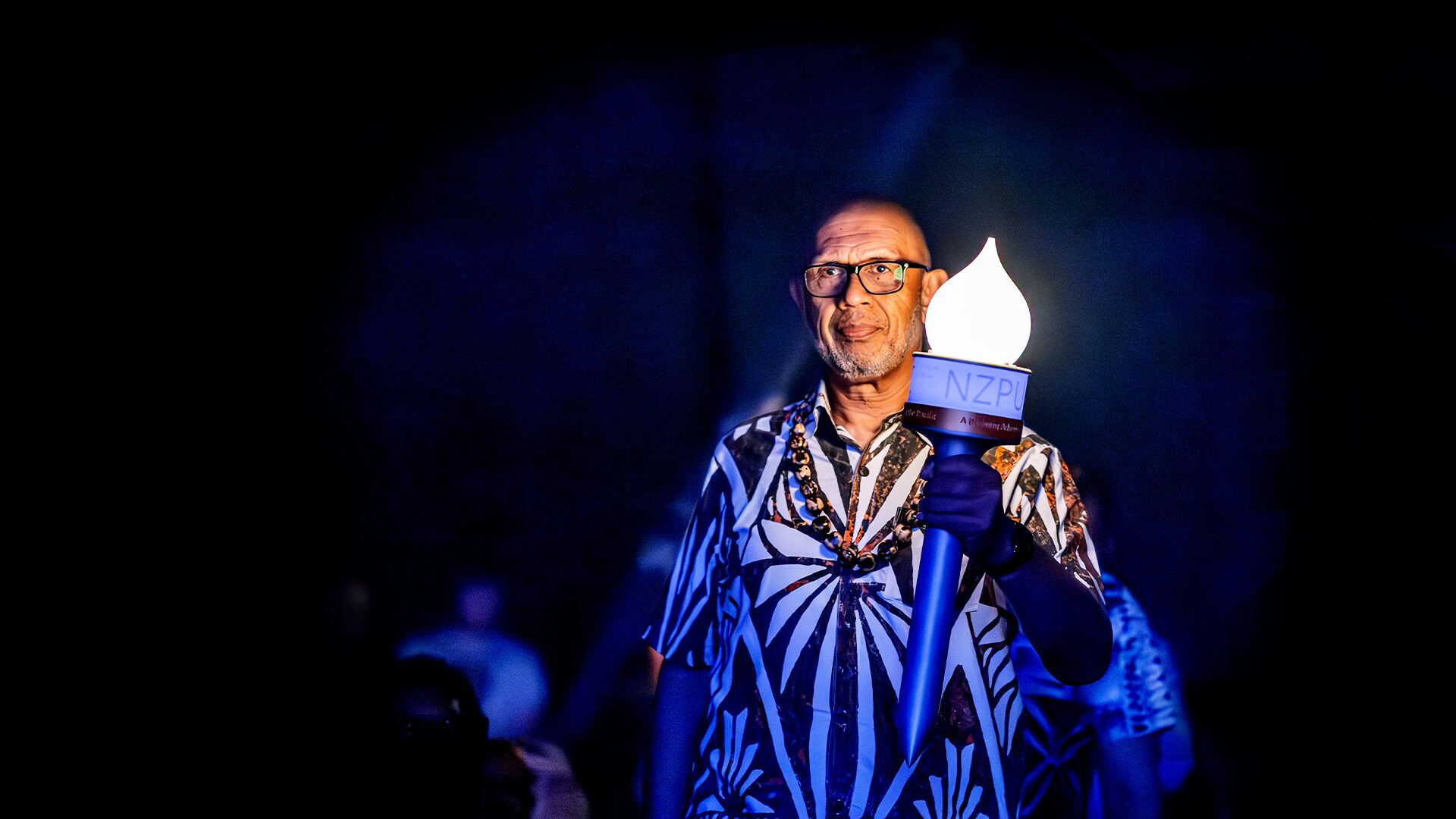
The South Pacific Division (SPD) contains four unions. Adventist Record recorded interviews with all four union presidents during the South Pacific for Christ launch program in Brisbane, Queensland. Here is our chat with Dr Eddie Tupa’i, president of the Church for the New Zealand Pacific Union Conference (NZPUC).
Juliana Muniz (JM): We’ve had a long week here at this event. How are you finding it? What stood out to you?
Eddie Tupa’i: As I look across the room each night, or the tent I should say, and see the diversity of the church here in the South Pacific, there’s a sense of hunger, of wanting to do more for God, and that’s come through in the stories and the testimonies—it has been inspirational. I have a saying, and it goes like this: “The most important meetings are the meetings in between the meetings.” And so it’s all the catch-ups, it’s the meals with different people, it’s running into people you haven’t seen for a long time, that reminds me we’re part of this amazing family, the South Pacific Division, and what God is doing here. So yeah, it’s been a real blessing.
JM: It’s been good catching up with a bunch of people here. So New Zealand Pacific comprises six nations, maybe you can help me out here. New Zealand, Cook Islands . . .
Eddie Tupa’i: French Polynesia, there’s New Caledonia, Wallis and Futuna, and Pitcairn. You see you’ve got your missions, you’ve got conferences, you’ve got Melanesia, Polynesia, French speaking, so quite a diversity. A very unique Union.
JM: Before we talk about the upcoming mission movement of New Zealand Pacific for Christ, can you give us a bit of a background or an idea of what your mission field looks like? What are the challenges in New Zealand Pacific?
Eddie Tupa’i: I’ll start with New Caledonia, where there were the recent riots. So you’ve got that particular type of tension, the political tension in their country, in the locals, the Kanaks, wanting to have independence. So that tension impacts the Church, but also the witness of the Church in a place like that. Then you have Pitcairn, which has 35 people on the island, with 24 regularly turning up at church on Sabbath. So that’s quite different again. French Polynesia, which is many, many islands spread over a vast area, and that is diverse in and of itself, and of course French and Tahitian. And then the Cook Islands, again, very much Polynesia, very different in its own way, 15 islands. Then New Zealand, which is organised into North and South New Zealand conferences, so they work together to reach New Zealand.
So you’ve got the secular, you’ve got the developing, you’ve got the Polynesian, Melanesian, and as I mentioned before, French speaking. That gives us quite a variety of challenges. And you’ll hear as I try and explain our approach to South Pacific for Christ needing to respond to that uniqueness.
JM: What are your goals and strategies for this quinquennium, maybe to address some of those challenges as well?
Eddie Tupa’i: The Union’s role we see is based on Ephesians 4. And the key words out of Ephesians 4 are leadership working to use ministry—as in disciple-making—to bring unity in the Church. I love the approach that Pastor Erton Köhler is using, where he’s saying integration for mission, being integrated for mission. So that idea of the Church being integrated, especially with its diversity. And then in that diversity we move towards this word that’s in verse 13, which is maturity. And we’d love to think, and pray for, that in 2030 our Church will be more grown up, more mature than we are right now in Christ, in that beautiful message from Ephesians 4.
JM: Now let’s talk about New Zealand Pacific for Christ [in 2027]. You probably have a lot of challenges trying to make that happen because of the diversity. What are your plans so far?
Eddie Tupa’i: So that’s the basis I’ve given you, Ephesians 4. And then for us with our role to all that complexity that you’re asking about, is we exist as a Union to equip these missions and conferences for mission. And mission that brings transformation. So we talk about equipping for mission and transformation. We want to be on God’s mission. We want to see that bring lasting change in people’s lives. And so we’ve said to each of our entities, “You’re unique. We can’t do a one-size-fits-all. We need to allow you to look at what is appropriate for your area.” So for some of our territory, they’ll say, “We would like to do the classic evangelistic program.” That’s all good. Other parts of our Union are saying, “Well, we want to focus on small groups. We want to focus on using digital media to connect with people. We would like to use community engagement.” Right across the span of the different ways that you can grow and build church, we’re wanting to engage all those different ways of doing church.
JM: Also next year, in addition to New Zealand Pacific for Christ, the world Church has the rollout of OneVoice27. Are you planning to make that part of your strategy for New Zealand Pacific for Christ, or are you planning to incorporate it in any way?
Eddie Tupa’i: We don’t want to confuse things, and so I really like your question because it is very much on point. We are going to go ahead with OneVoice27. That is going to be how we represent, how we speak, promote, connect the message that we have as a Seventh-day Adventist Church in our part of the world, whether you’re speaking French or Cook Island Maori, whatever language, it’s all with one voice. So we’re going to be going totally under the OneVoice banner. Also Juliana, July 10 this year, Pastor Erton Köhler is going to be in New Zealand for the GAiN conference, but on that Friday night he is going to launch OneVoice27 for New Zealand Pacific Union Conference in Auckland.
JM: Oh, that’s very good. How can members prepare for all of that?
Eddie Tupa’i: We are very clear about this, and we say “fast and pray, equip and send”. So the first part is the inner life, is fasting and praying. Those things go together, those things are important, ensuring that what is in and of us in our life of following Christ will then flow out in how we go about doing mission. So first thing is fast and pray, the second part is to equip and to send, and that’s based on Acts 13:1-3, where the church begins to send out missionaries, and the first were Paul and Barnabas.
JM: Before we close, in addition to New Zealand Pacific for Christ and OneVoice27, are there any other mission initiatives that members across NZPUC should be aware of?
Eddie Tupa’i: There is church planting and this is interesting because I mentioned right at the beginning the difficulties of New Caledonia, but we have strong church planting there. We have, as part of New Caledonia Mission, Wallis and Futuna. So we have a church presence that’s been in Wallis for the last 10 years. We just in the last two years have begun a small presence in Futuna. And so that church planting part of the church, of New Caledonia, is something that is going right across our region.