The FIFA World Cup, a health clinic and Bible truth
August 18
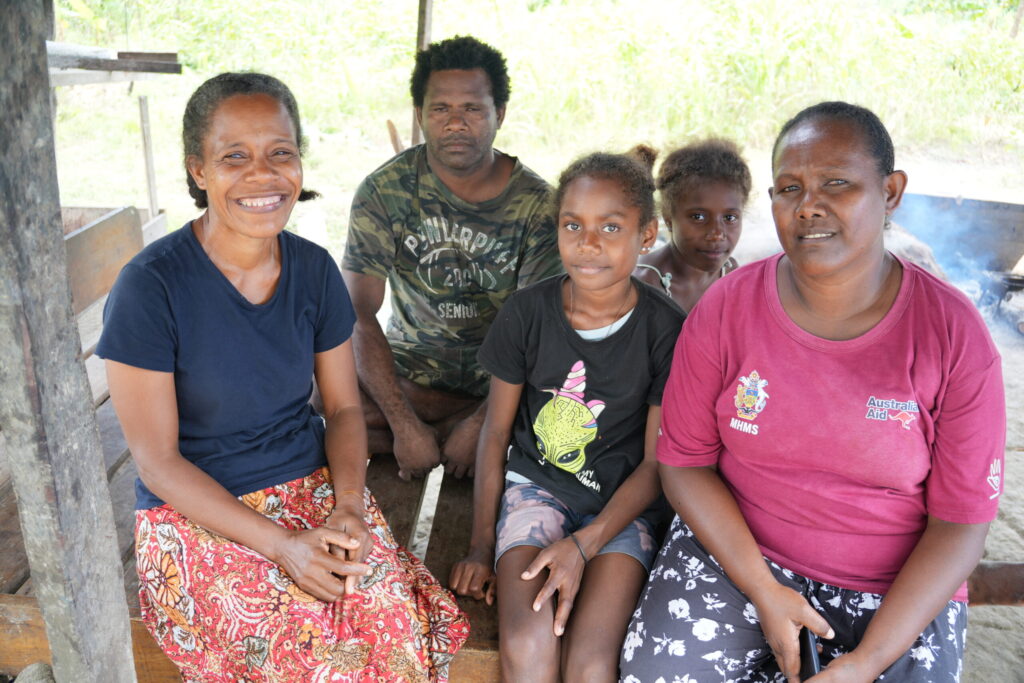
It was around 3 am when Wrinnes Tavalia heard steps outside his stilt house in the isolated jungle Vataghobu village in the Solomon Islands on July 16. In the dark, people from neighbouring villages walked silently, looking for a place to sit and wait under his veranda.
Across Mr Tavalia’s house and by the water well, two wide bamboo reeds firmly secured to the ground held a rustic white sheet that acted as a projection screen. A few yards behind, another bamboo reed held the Starlink downlink receiver. And still farther behind, covered under a tarp tent, a diesel generator was waiting for its time to spring to life.
There in a place with only a path access to a road a half-hour away, Mr Tavalia had promised people that using the technology available, he would screen the Argentina-England FIFA World Cup semifinal game, scheduled for that day at 6 am Solomon Islands time. And so it was that three hours before the scheduled kickoff time, some villagers arrived to silently sit and wait for the game to start.
A Lay-Led Evangelistic Initiative
Many of the same people who arrived early to watch the soccer game on the screen in the middle of the jungle had been watching evangelistic meetings the previous evenings. The whole initiative was the brainchild of Ferol Asa, recently appointed education director for the Solomon Islands Mission of Seventh-day Adventists, and his wife, Relnah.
When the Asas heard about the Solomon Islands for Christ efforts in their home country in July, they decided that, besides the evangelistic meetings organised by the regional church organisation, they would help fund a lay-led effort. The selection of Vataghobu was not random—it is Relnah’s mum’s village, and several of her brothers, nephews and nieces still live in the area and own plots of land.
“We felt the call to do something with our people,” Mr Asa said. “We wanted to help them know more about Bible truth since many of them belong to other Christian faiths but are not acquainted with many Bible teachings.”
A Bold Implementation
But how can a person put evangelistic meetings together in an isolated place with no roads or electricity?
The Asas enlisted the support of a donor friend from Australia who funded the purchase of the Starlink downlink. Then, for a set monthly payment of about US$30, they enjoy unlimited projection time, electrical power and even Wi-Fi internet service, provided the generator is working.
The Asas then made arrangements with the area’s “mother church”—the New Tenabuti village church—approximately one hour away. Every evening from about 7pm to 8:30 pm the Vataghobu people and others from neighbouring jungle villages would hook on the mother church broadcast to watch the livestream of the singing, praying and preaching as it happened.
Pulling it off also demanded significant logistical sacrifices. The Asas and other volunteers left their comfortable houses in Honiara and, rain or shine, camped in tents for two weeks. Local children and teens helped carry the supplies or equipment on their shoulders from the road through a long, winding path through the jungle and by a river, to finally reach Vataghobu.
“People are attending every evening, as they learn more and more about what the Bible says about God’s plan for the future,” Mr Asa shared on July 16. “They are embracing God’s full truth.”
A Free Health Clinic in the Jungle
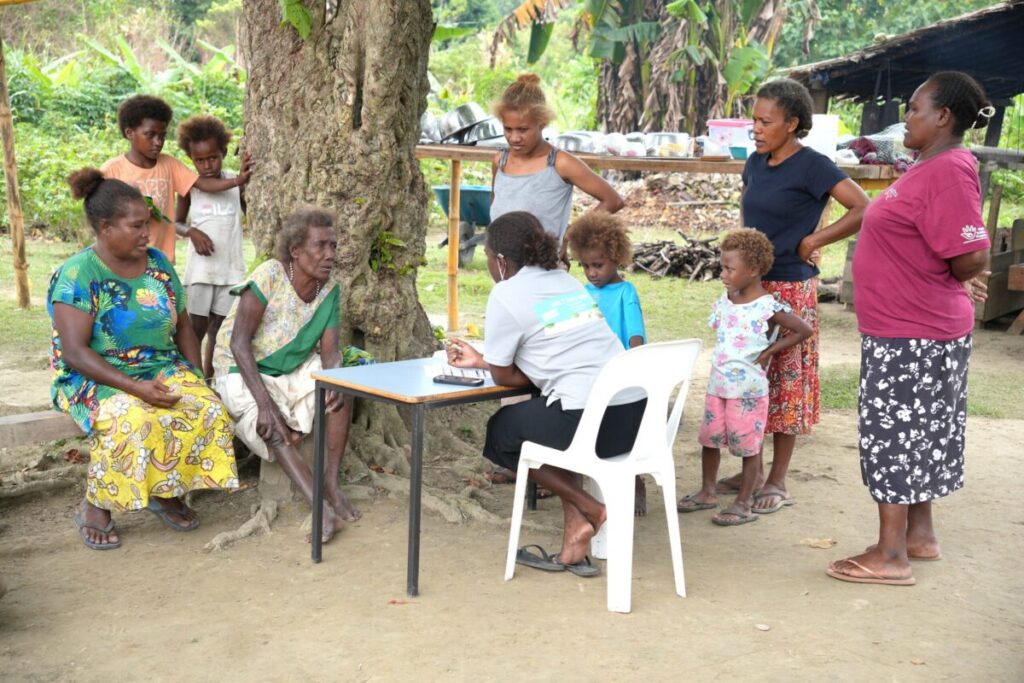
After the soccer match ended on July 16, many stayed for breakfast and then waited patiently for the next activity. As it had been announced, later that morning a group of nurses and volunteers from Honiara arrived in Vataghobu to offer free health assessments and help residents who, for the most part, hadn’t seen a physician for years.
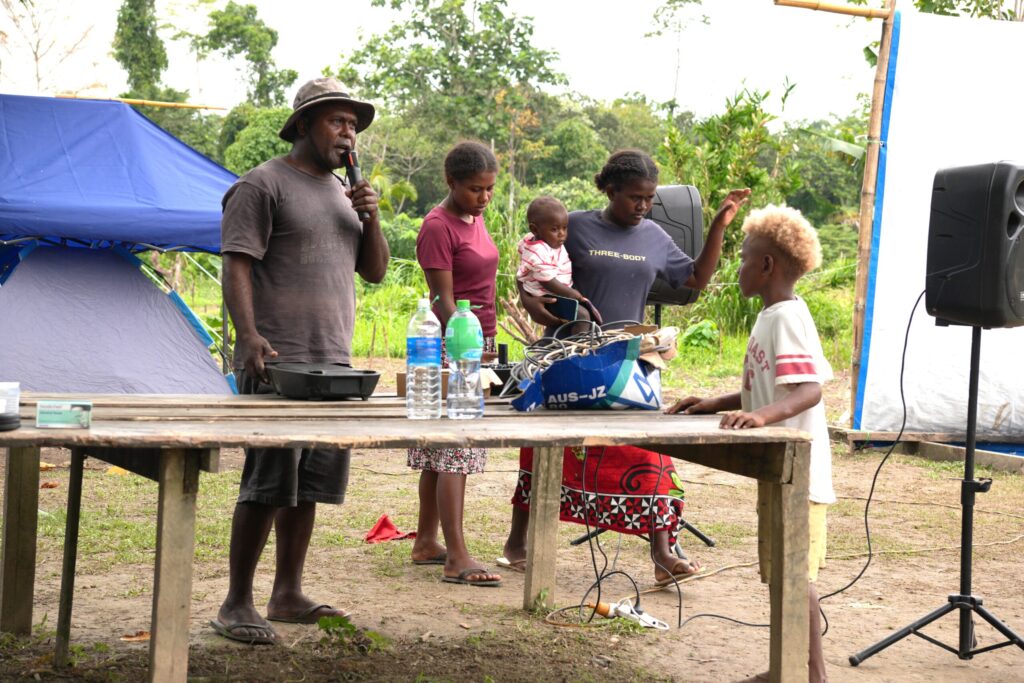
Mr Tavalia jumpstarted the generator, connected two large speakers to a sound system set and, microphone in hand, announced to the jungle that the clinic was now open. Little by little, villagers walked out the massive trees of the jungle, the palm trees and the yuca and banana plants. They patiently lined up, hoping to get a personalised health assessment and some health tips by a professional.
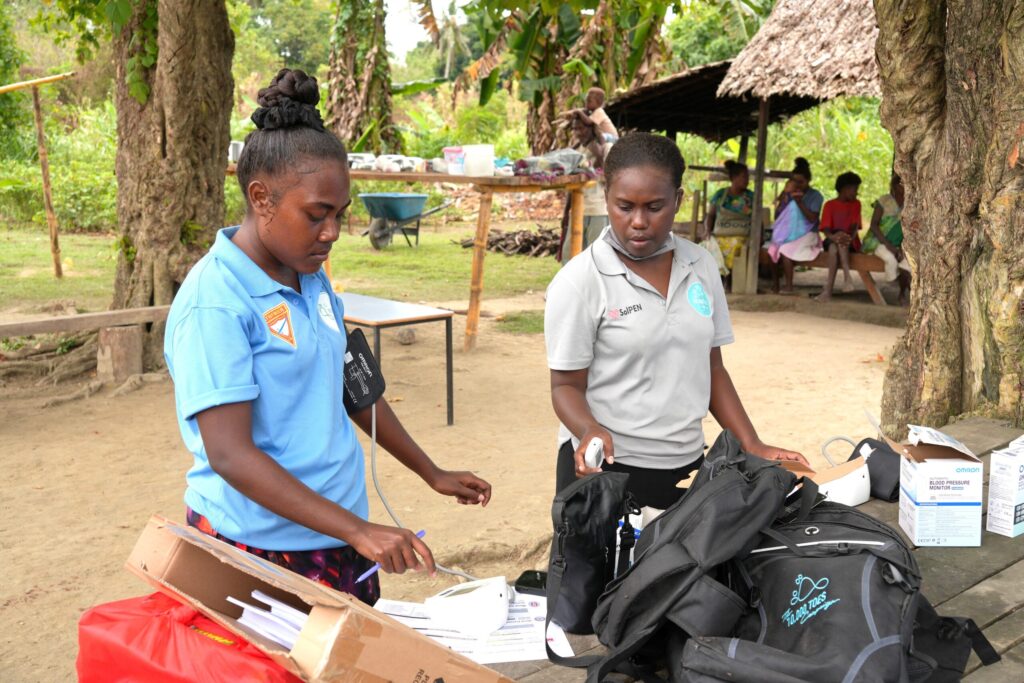
Two nurses, Veronica Darcy and Yhvett Mioni, assisted by a group of volunteers that they had trained, moved tables and chairs around and set the equipment as the village people started to line up for an assessment and consultation. The Honik Youth Group, one out of four in which Adventist young people are organised in the Kukum Adventist Church in Honiara, also travelled from the capital city to support those efforts.
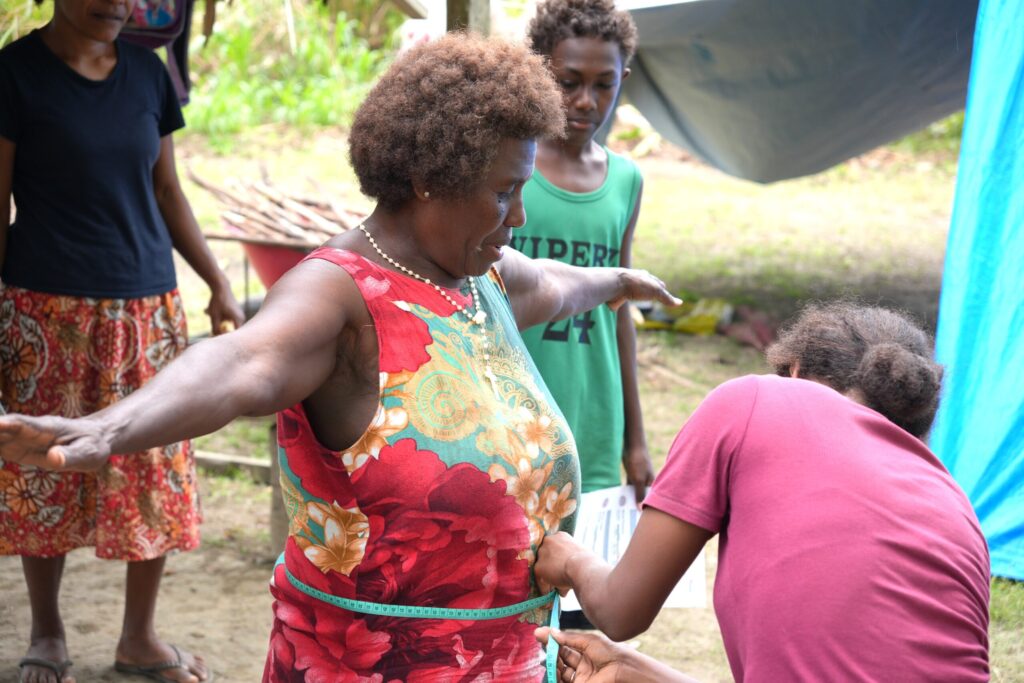
Ms Darcy is an area facilitator of 10,000 Toes, an initiative of Health Ministries in the South Pacific Division that seeks to help people change their lifestyles to prevent diabetes and other noncommunicable diseases. “I have been training young people to serve as 10,000 Toes ambassadors,” she shared. “Some of them are here helping us to assess those who come.”
According to Ms Darcy, the health issues they find are usually similar as village residents struggle with their sugar levels, high blood pressure and other ailments. “As they haven’t seen a doctor in years, they appreciate getting to know where they stand and receiving tips how to improve their lifestyle to feel better and avoid disease as much as possible,” she explained.
A Wholistic Ministry
Despite the heat and humidity in the area, at the end of the free clinic day people from several villages walk once again to find a spot in front of the screen. It’s just another day and another opportunity to keep learning about God’s plan for humanity as it has been revealed in Bible prophecy, organisers say.
“Some of these topics are not easy to share,” Mr Tavalia acknowledges. “But we must preach them anyway. And yes, even in Vataghobu, they need to know.”—Marcos Paseggi, Adventist Review